Objectives
The challenge was to create engaging, immersive content that reduced production time without compromising accessibility or site performance, so that editorial teams could self-publish. We also wanted to start including richer analytics, to understand and learn from our readers.
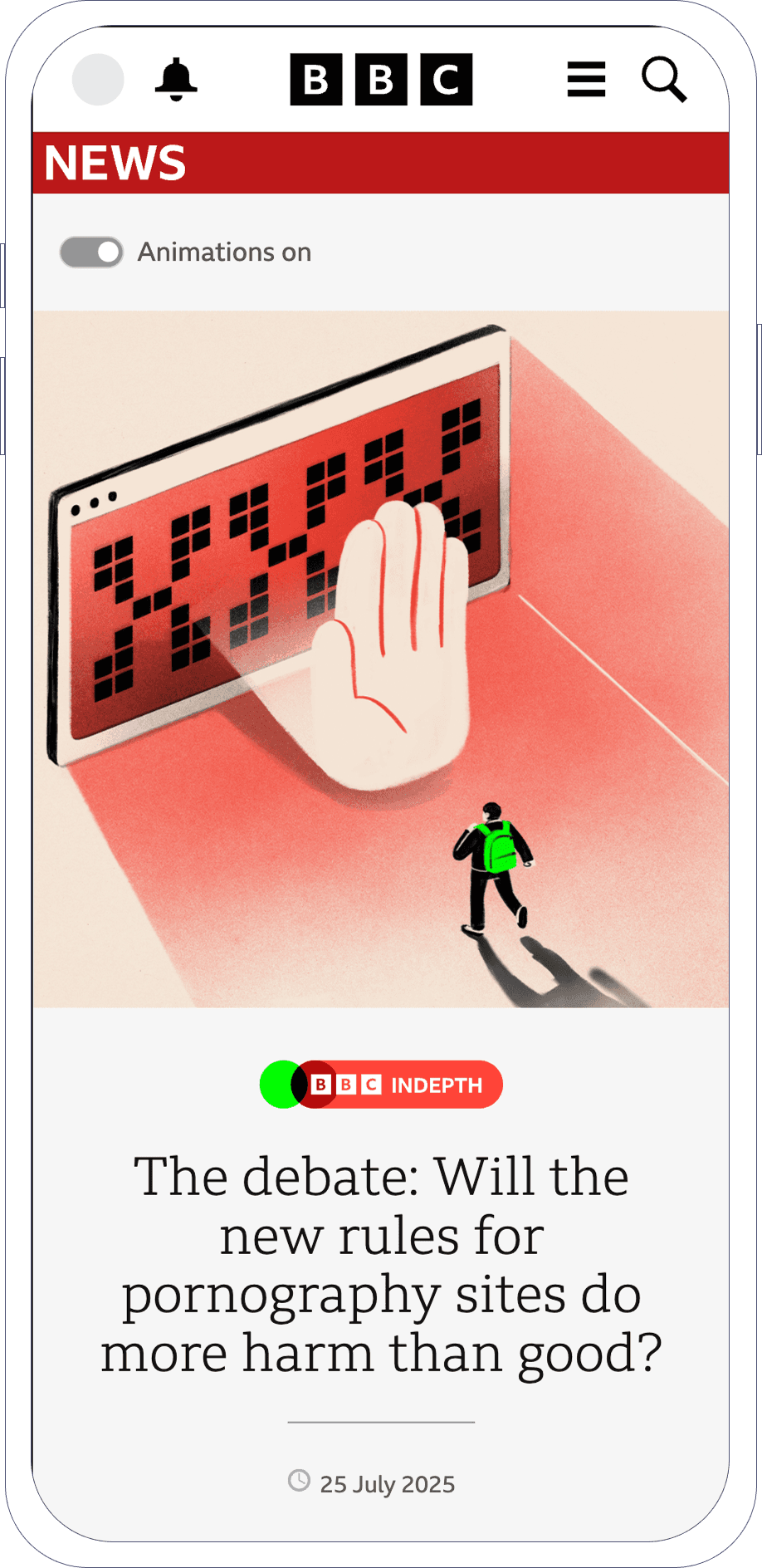
View article here →


My Role
I was the lead designer.
Component library: advised on how to set it up, and designed components that work with the internal CMS.
Ways of working: discussed them with editorial teams, worked with engineers on how to build the components, and made the case for tracking them so we could collect usage data.
Testing: started user testing on usertesting.com, summarised the results with Copilot and built prototypes with Claude.
Mentoring: coached less experienced designers in modern product design, taught atomic design theory and ran Figma workshops.
My early solo work showed how many designers the project needed, and the design team grew from just me to ten.
Methodology
The organisation lacked familiarity with product thinking, which made it hard to shift editorial teams toward a more efficient, collaborative workflow. Instead of responding to a rigid “shopping list” from stakeholders, I designed components that met existing needs while fitting product workflows.
The new components needed to be:
Reusable across Visual Journalism articles
Scalable, with variants for sub brands and different content themes
Trackable, with data analytics
Accessible (W3C compliant)
Through extensive discussions with editorial, engineering and product teams, I developed an MVP suite of accessible, responsive components for immersive storytelling. While largely
self-service, the initial launch was planned as a guided experience.
The Maiden Voyage
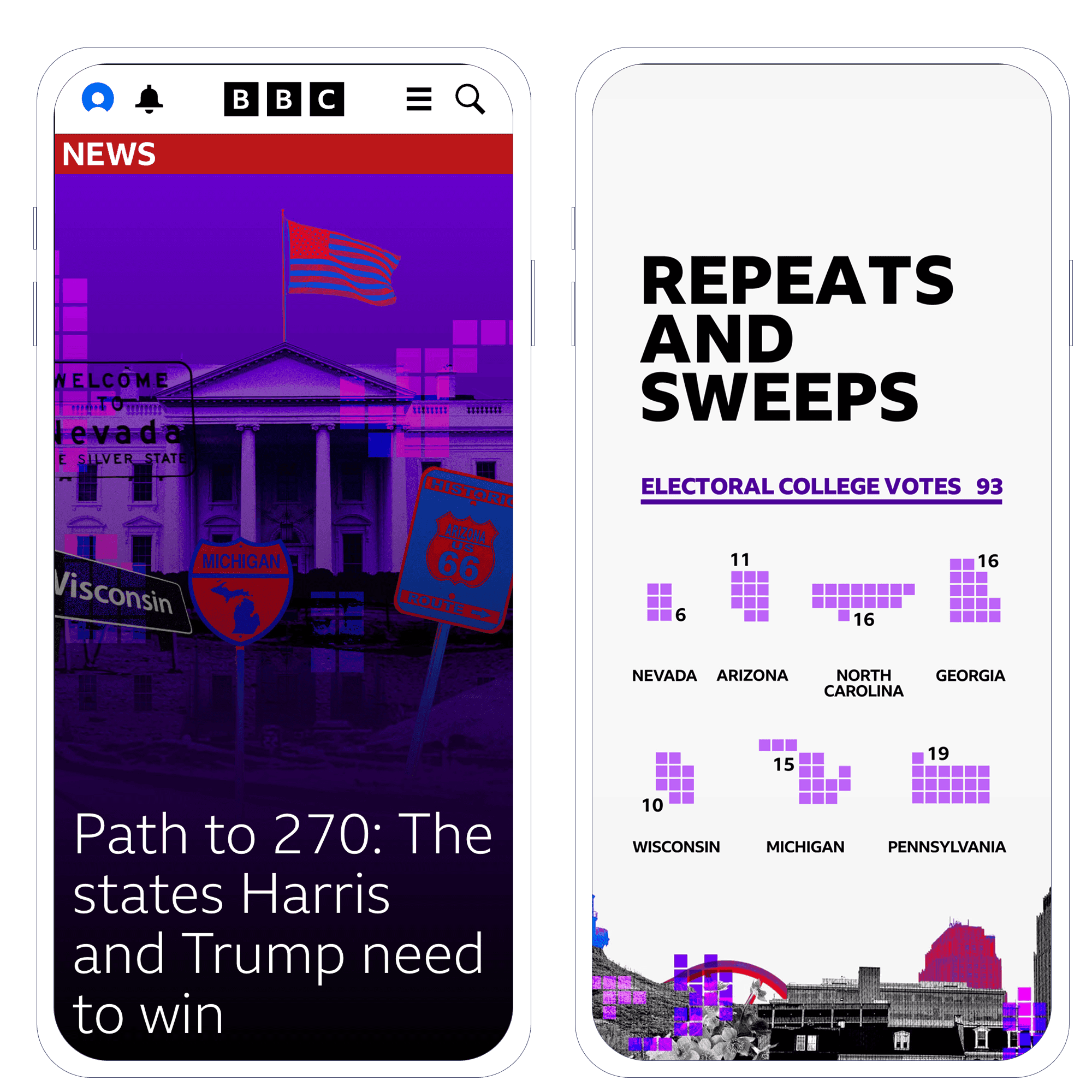
We used our first set of components for an article launched for the US Election 2024. Developers had built a basic CMS (I call it a “proto CMS”) where editors entered content into a Google sheet with a drop-down listing the components they could use. I created a set of guard rails and accompanying documentation to help.
It was a great test of how our system worked, but it wasn’t self-service just yet.

Testing reader behaviour
I ran a series of tests on usertesting.com and wrote the questions myself, each aimed at something we needed to understand. I summarised the results with Copilot.
Some of the questions:
How far do readers scroll?
How many swipes does a reader make before leaving?
Does animation and video in the article header distract from reading, or improve it?
I used A.I to help me synthesise and summarise the test results for playback during Editorial and Designer weekly meetings.
Retro
This team was a first of many things for BBC News.
A squad made up of journalists, developers and designers. Something taken for granted in larger product focussed organisations. As news happens in real time, content decay happens really fast. Subsequently, the MVP of this experience had to be shipped very quickly. The project was shipped in 10 days.
Also fast pace news requires constant change and this was a big challenge for developers as well as designers to be so reactive. Hence, the need for a self-publishing tool that didn’t rely on this. As challenging as this particular project was, It was validation of how much we need this tool and lessons learned for version 2.